Friday, January 31, 2020

FACTS ABOUT B2 BOMBER

Each B-2 Spirit Has Its Own Personality
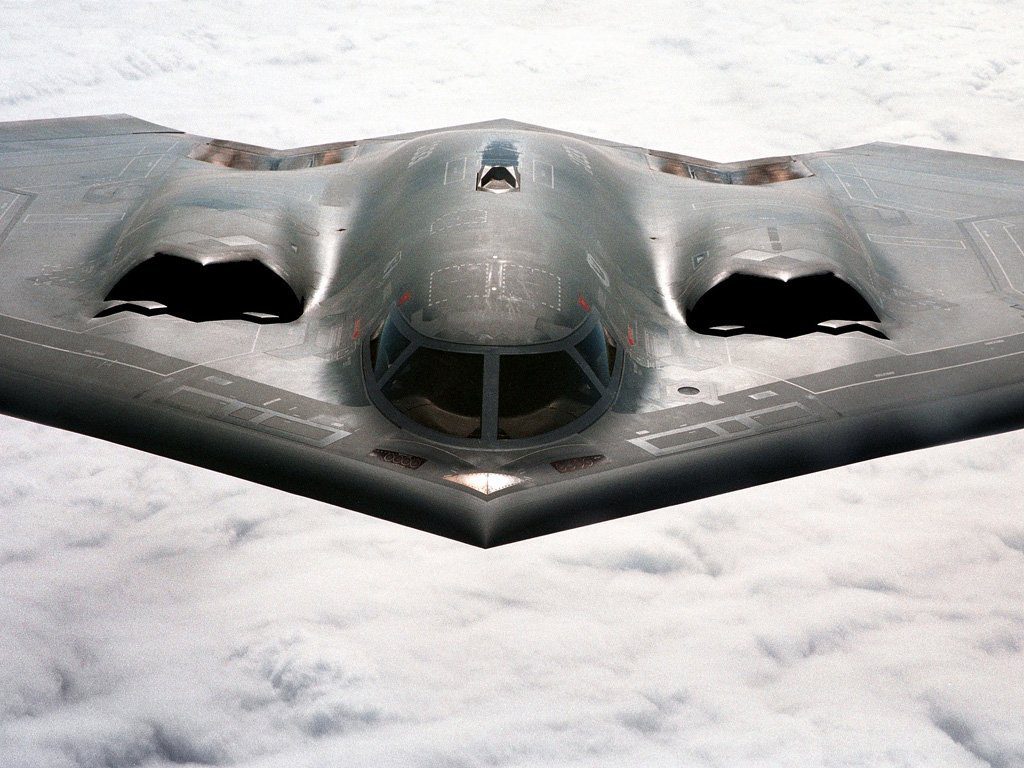
B-2 Spirit Stealth Bomber
US Air Force
With only 21 B-2 Spirits produced, the air crews that work on them get to know individual aircraft very well. As it turns out, this highly complex aircraft is a colorful bird. Each individual B-2 Spirit has its own distinct personality, and its own unique maintenance needs. This comes as a surprise when one considers the precision engineering and the uniform use and maintenance needs. This leads to some colorful moments. Interestingly enough the pilots tend to view the aircraft as uniform, avoiding personal favorites.

The B-2 Has Indefinite Range And Flight Time
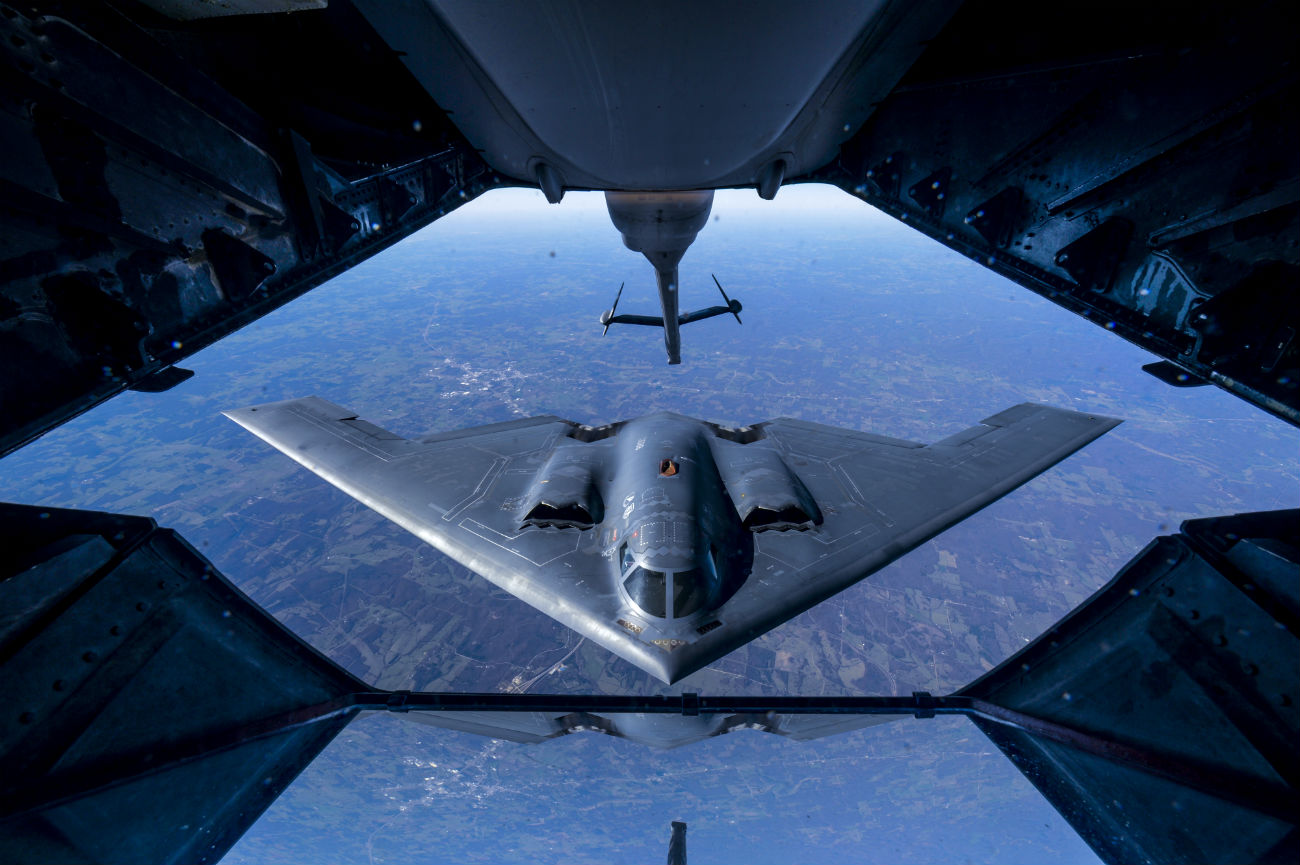
B-2 Spirit Aircraft refuel In air
Senior Airman Keith James, U.S. Air Force
Bombers are almost always designed with range in mind, but the unique design of the B-2 Spirit lends itself to extreme long range operations. Without refuel, the B-2 Spirit has a range of over 6,000 miles. However with refuel, that range can be extended nearly indefinitely. As it stands, from its three principle bases, the B-2 Spirit can reach any inhabited point on the planet with minimal support. This gives the US Air Force an unrivaled ability to deliver a payload—conventional or nuclear—to any point the mission might require.

The Anti-Radar Design Relies On A Complex Mix Of Materials
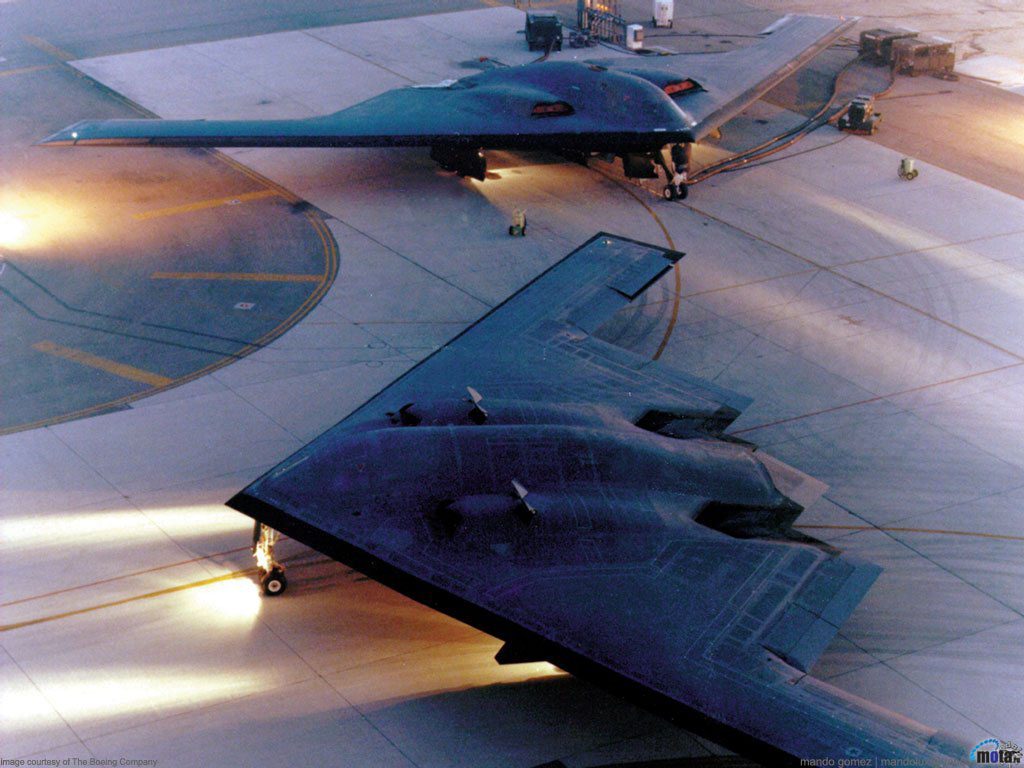
B-2 Spirit on Runway
US Air Force
Stealth aircraft rely on a lot of things: proper shape and profile, electronic countermeasures, the training of the pilots and crew. However, the material component of the stealth factor is often overlooked. With very little sheet metal in the skin of the aircraft, the B-2 relies on a mix of over 200 chemicals, sheets of composite material, and high tech paints. Any gaps are filled with an expansive foam made from a classified formula. The exact composition is a carefully guarded secret, and one that changes frequently.

The B-2 Is In An Arms Race With Enemy Radar
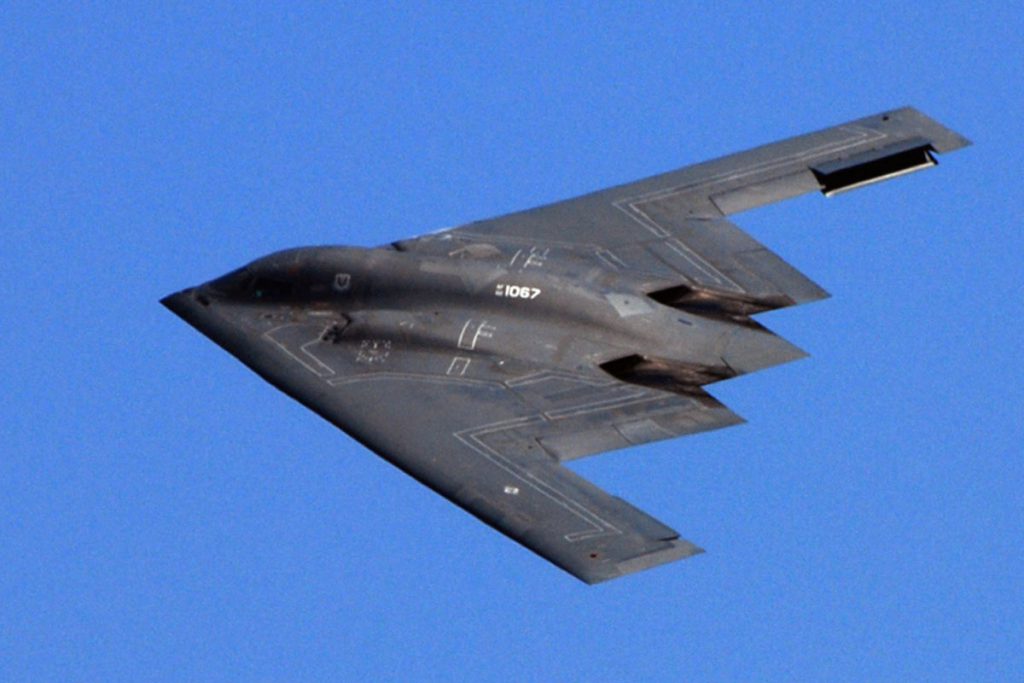
B-2 Spirit Stealth Bomber
Northrop Grumman
The world of military aviation is constantly evolving, and some of the world’s emerging powers, including China and Russia, are on a quest to develop their own stealth aircraft. Likewise, they constantly seek to negate the US’s advantage in stealth technology. As their abilities develop, US intelligence gathers more information about what they’re up to. That data is then fed to maintenance crews working on the B-2 Spirit. Those crews in turn adapt the material composition of the B-2’s anti-stealth coating to counter enemy capabilities. It’s an ongoing mission, one that will likely last the lifespan of the B-2 Spirit.

The B-2 Is Prone To Odd Accidents
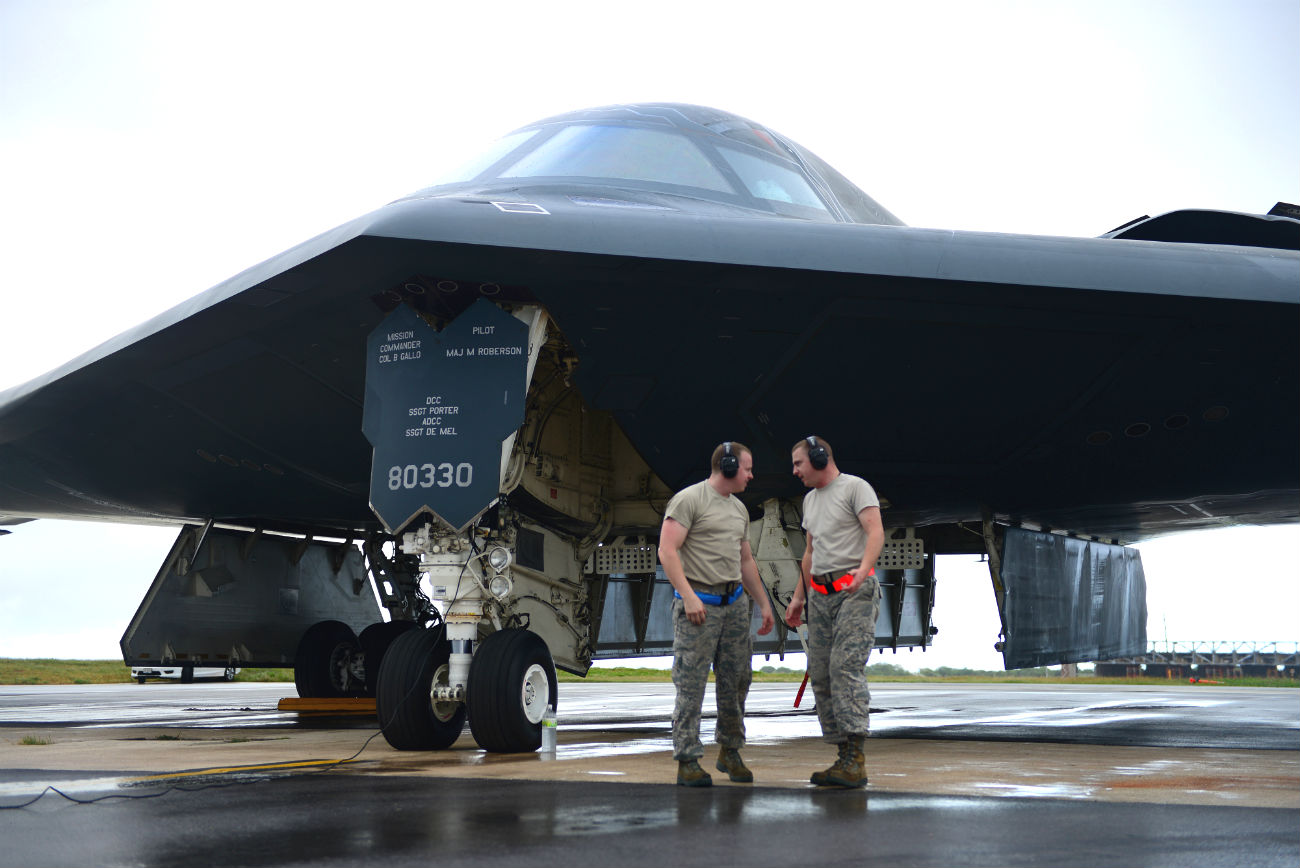
B-2 Spirit Aircraft inspections
Airman 1st Class Jazmin Smith, U.S. Air Force
Most military aircraft are difficult to fly. And the more advanced the aircraft, the trickier they are to keep in the air. And while US pilots train hard, accidents do happen. In keeping with the B-2’s unique design and mission, it has had a unique set of accidents. In 2008, the Spirit of Kansas crashed during a routine takeoff from Andersen Air Force Base in Guam. The crew ejected safely, but the aircraft was nearly destroyed. After a strenuous investigation, the US Air Force found that a freak instance of moisture buildup was to blame. With a little redesign, the B-2 fleet quickly returned to duty.

A B-2 Mission Caused A Diplomatic Incident
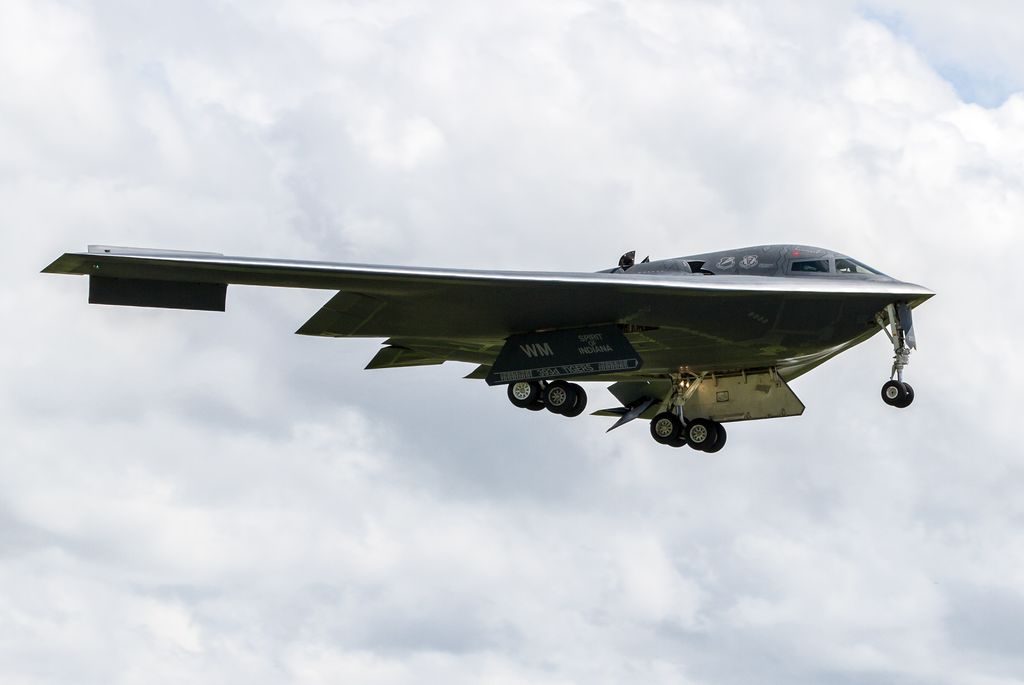
B-2 Spirit Landing
Andersen Air Force Base, Guam
A complex series of intelligence failures and miscommunication lead to an international incident resulting from a B-2 Spirit mission – one of the crazier B-2 bomber facts. During a bombing run over Kosovo, a B-2 Spirit accidentally bombed the Chinese Embassy. Several staff members were killed, and the incident became a major diplomatic incident between the US and China. This, for good or ill, put a lot of focus on US stealth capabilities and the B-2 Spirit in particular.

Handling Nuclear Weapons Is Tricky
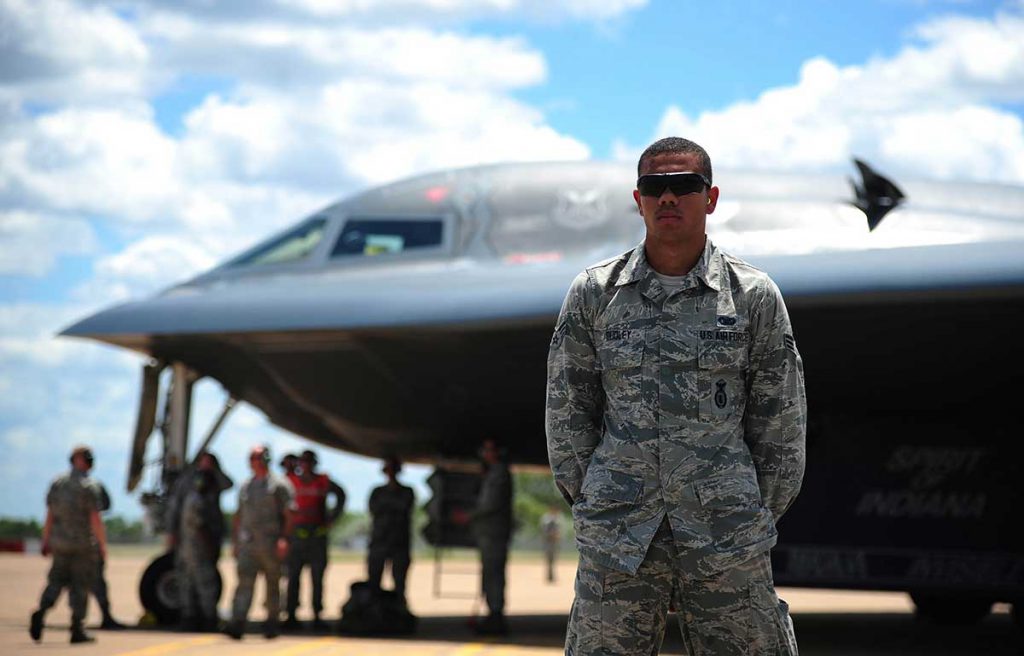
A B-2 Spirit in Australia for training
Australian Ministry of Defense
The nature of the US nuclear weapons stockpile has changed over the years, and the organization of the B-2 Spirit fleet along with it. Following a string of incidents in which nuclear weapons were mishandled, the US Air Force launched a comprehensive organizational overhaul in 2012. This included reassigning the B-2 Spirit fleet to the control of the newly formed Global Strike Command, the central authority managing US nuclear weapons. While this had little effect on day to day operations, it made for vast changes in the way the B-2 Spirit was deployed around the globe.


The B-2 Spirit’s Design Is An Optical Illusion
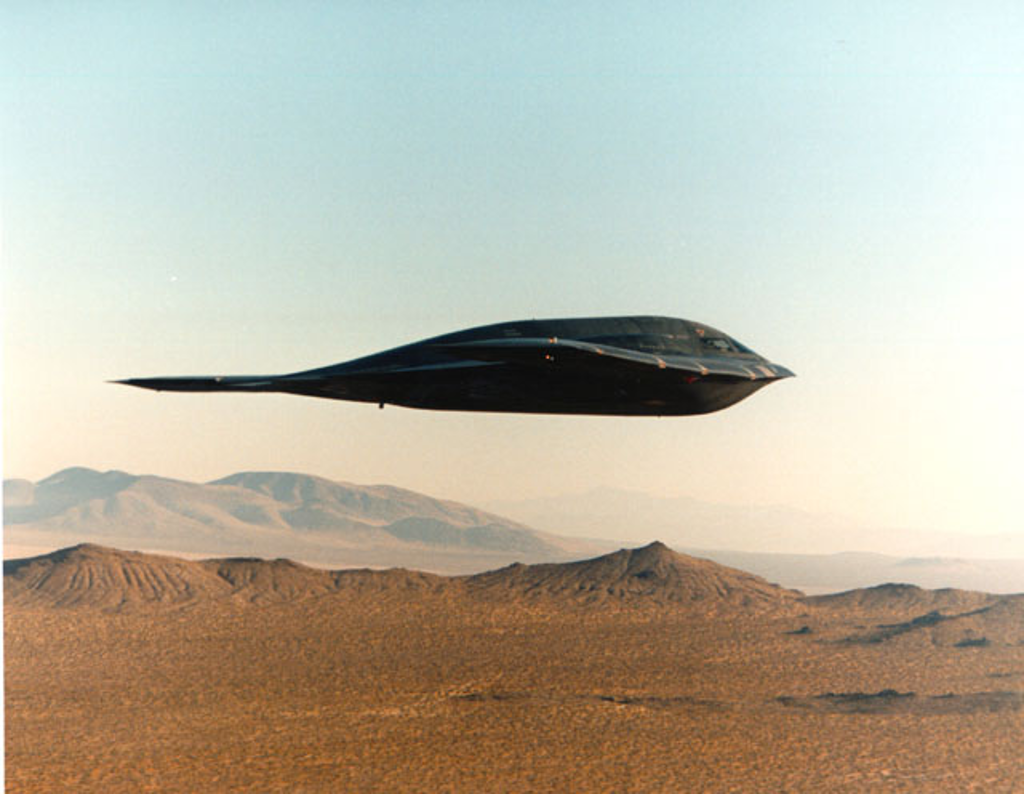
B-2 Spirit in Profile
US Air Force
While the focus of the B-2 Spirit’s design is to fool radar, it also works to fool the human eye. The B-2 Spirit is indeed a flying optical illusion. Viewed from one angle, and the aircraft is a thin line—a ‘flying wing’, as the design is called. Viewed from a slightly different angle, and the whole thing becomes a bulbous flying torpedo. This makes the B-2 difficult to spot in the skies, and potentially difficult to identify. As its missions are most often classified, the ability to disappear or distort visually gives the B-2 Spirit a hefty advantage over its competition.

There’s A “Haunted” B-2 Spirit
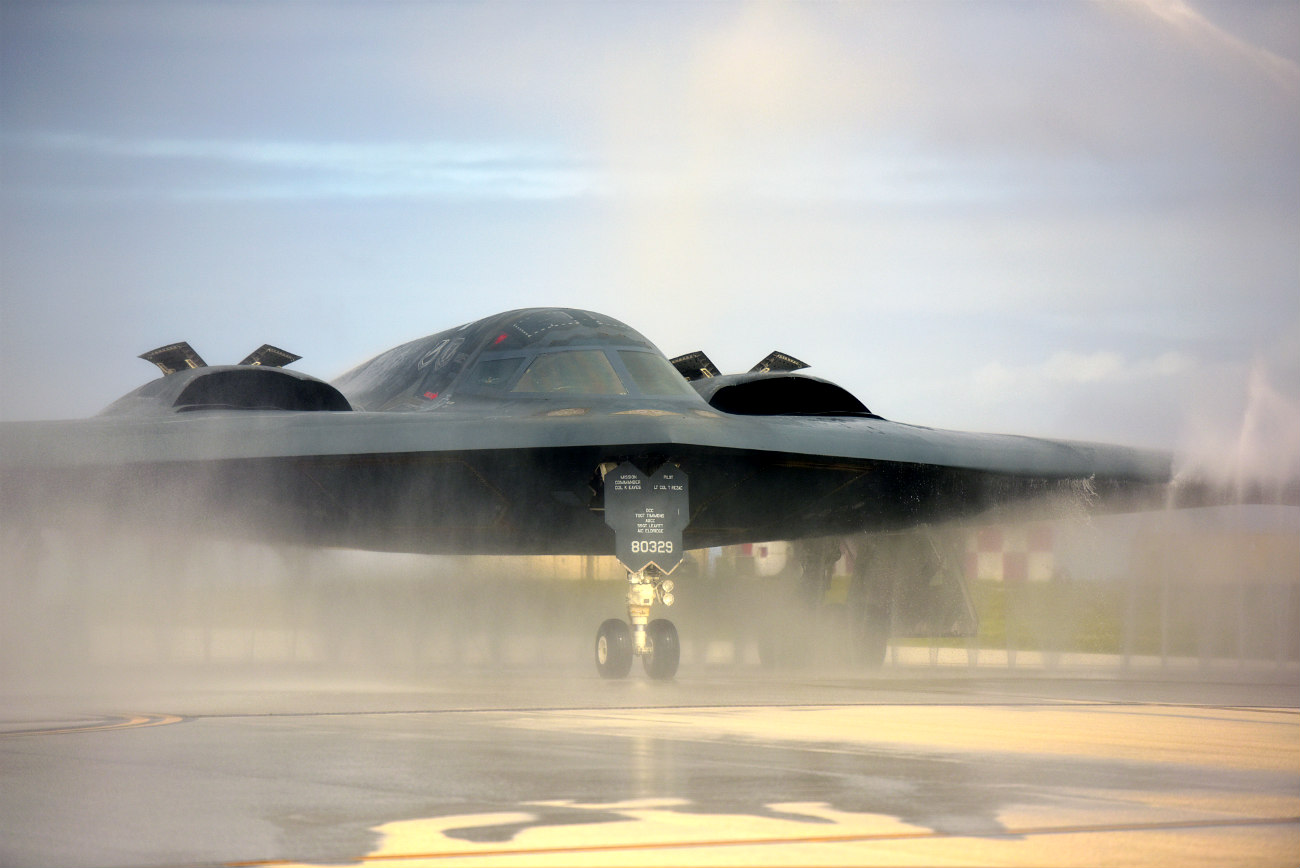
B-2 Spirit Aircraft Bird bath
Airman 1st Class Jazmin Smith, U.S. Air Force
This is one of the coolest B-2 Bomber facts. Maybe the name offered a little foreshadowing, but legend has it that there is a haunted B-2 Spirit. According to maintenance crews, a B-2 Spirit stationed at a US Air Force base in Guam offered a moment straight out of a horror film. With no one behind the controls, the aircraft—named The Spirit of Kitty Hawk—turned its engines on by itself. The aircraft in question earned the nickname “Christine” after the haunted car in Stephen King’s eponymous novel. Whether or not this story is true is the subject of some debate. Nevertheless, the tale has become part of the B-2 Spirit’s legend, and is held as the truth by folks who work on or fly the Kitty Hawk.

Northrop Grumman Adopted The Motto “A Miracle A Day” During B-2 Development
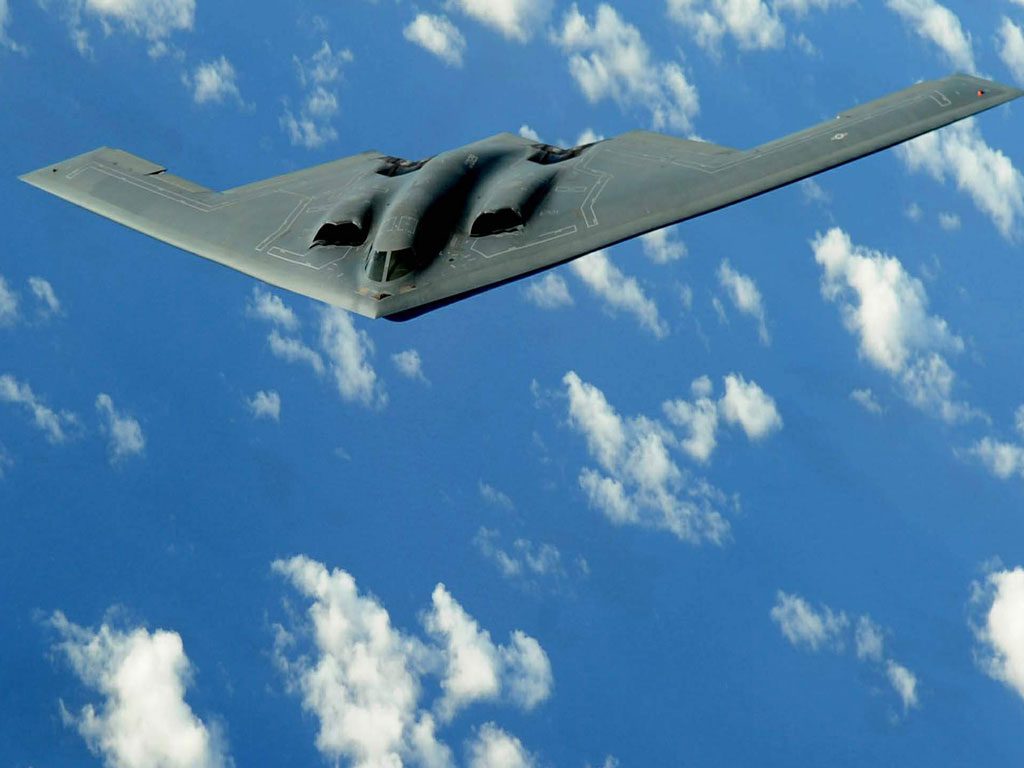
B-2 Spirit Over The Pacific B-2 Bomber Facts
Northrop Grumman

The B-2 Spirit’s stealth needs and unique mission meant that the airframe and the engineering behind it had to go above and beyond. The designers and engineers at Northrop-Grumman had a motto that they adopted while working on the B-2: “A miracle a day”. And they delivered, from engineering tolerances that were far tighter than those found on any other aircraft, to developing materials that were well ahead of state of the art. Everything about the B-2 bordered on the miraculous, and continues to do so.

Wednesday, January 29, 2020

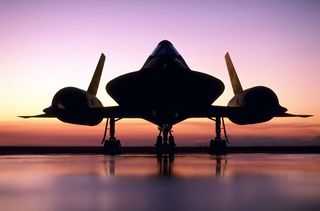
SR-71 BLACKBIRD

Faster than a speeding bullet, the retired SR-71 Blackbird can still turn heads as a Cold War spy plane designed for flying high and fast beyond danger. The ultimate flying speed demon not only served the U.S. military's needs for decades, but also shattered speed and altitude records for manned air-breathing jet aircraft.
The SR-71 regularly flew missions at speeds beyond 2,000 mph (Mach 3) and could survey more than 100,000 square miles of the Earth's surface per hour from a height of 80,000 feet (15 miles). Such extreme operating conditions allowed the aircraft to safely avoid interceptor fighter jets or missiles, but also forced the two-person crew to wear astronaut-style suits in case of loss of cabin pressure.
Such extreme performance capabilities allowed an SR-71 to set two world records on July 28, 1976. The aircraft flew at just over 2,193 mph and at a height of about 85,069 feet.
Extreme design
Two turbine engines designed to run constantly in afterburner mode boosted the aircraft to its supersonic speeds. The aircraft manufacturer, Lockheed Martin, initially wanted the SR-71 to use liquid hydrogen as fuel — similar to the space shuttle's main engines — but abandoned the idea because it would have required huge amounts of fuel.
Lockheed Martin's Skunk Works division built stealth technology into the SR-71 by shaping its sleek airframe to reflect very little radar energy. The results proved partially successful.


The aircraft was also covered with a special black paint to absorb radar, radiate excess heat and to camouflage the aircraft against dark skies — a feature that inspired Air Force to give it the official "Blackbird" name.
Titanium skin helped protect the aircraft's aluminum airframe from the intense heat of supersonic flight. Temperatures ranged from 450 degrees F (232 C) near the back part of the aircraft to 950 degrees F (510 C) near the engine exhaust. The cockpit had special heat-resistant glass to withstand surface temperatures of 640 degrees F (338 C).
Birth and retirement
Lockheed Martin first proposed the idea of the SR-71 in the 1950s as a replacement for the slower U-2 spy aircraft. The first version of what would become the Blackbird, the A-12, flew its first surveillance mission with CIA pilots over North Vietnam in 1967.
The U.S. Air Force also wanted an interceptor fighter jet version that led to Lockheed Martin building three YF-12A aircraft, but two crashed during testing. Lockheed Martin eventually proposed a version designed for doing reconnaissance in the aftermath of a nuclear strike — the design that became the SR-71.
The SR-71's first flight test in 1964 eventually led to operational missions in January 1966. Blackbird crews ended up logging 2,801 hours of flight time during the aircraft's 24-year service.
Growing use of satellites for space surveillance and the growing danger of more effective air defenses eventually convinced the Air Force to end SR-71 operations in January 1990. The U.S. Congress attempted to revive the program in 1995 over the protests of military leaders, but budget disputes finally put that idea to rest.
NASA held onto three versions of the SR-71 for high-speed science projects and used them until 1999.

Thursday, January 2, 2020

BEST FIGHTER JETS

These fighter planes developed rapidly after the invention of Wright Brothers and during the WWI and WWII. There are thousands of jet fighter model around the world, but we have selected top 10 best fighters that are currently operational.

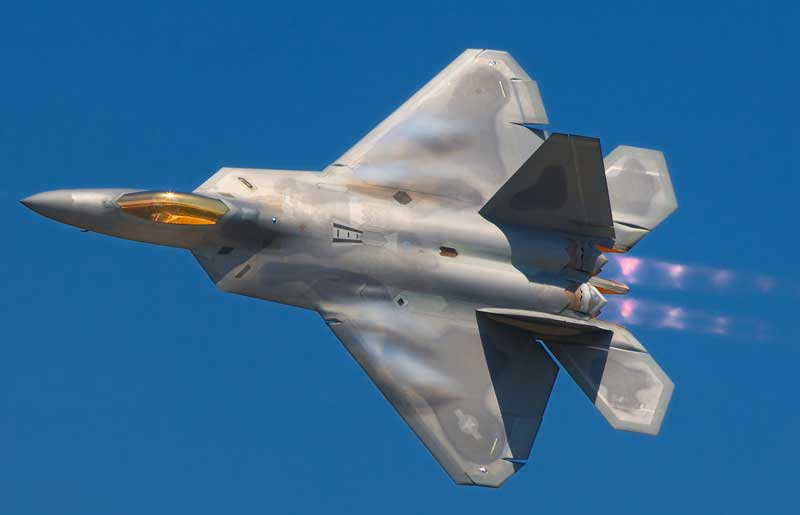
Lockheed Martin F-22 Raptor

Lockheed-Martin-F-22-RaptorLockheed Martin F-22 Raptor is a 5th generation and most stealthy spacecraft developed in the United States. This aircraft has excellent maneuverability and can perform operations in all-weather conditions. It was specially designed to gain air superiority among all the available jets of the world. But it is also better in performing air-to-ground attacks.
The exact technology that makes F-22 the most stealthy jet fighter is still classified. This fighter jet became operational for US Air Force since 2005 and is still the king of jet fighters.

Features:

  • Unit cost: US$150 million
  • Speed: 2.25 Mach (2410 km/h)
  • Thrust: 2 × 35,000 Ib (156 KN)
  • Range: 2,960 km
  • Wingspan: 23.56 meters

F35-Lightning II

F35-Lightning-IIF35-Lightning II is a 5th generation jet fighter developed by Lockheed Martin to perform successful ground attacks and achieve the air superiority. The development program for this jet fighter was one of the most expensive programs and due to this reason, it received many criticisms. The development cost for this fighter plane was majorly paid by the U.S. and the additional funding was then paid by NATO members and some U.S. allies. This jet fighter is currently operational in the United Kingdom, United States, South Korea, Netherland, and some other countries.

Features:

  • Unit cost: $2 million
  • Speed: 1.61 Mach (1930 km/h)
  • Thrust: 43,000 Ib (191 KN)
  • Range: 2,220 km
  • Wingspan: 10.7 meters

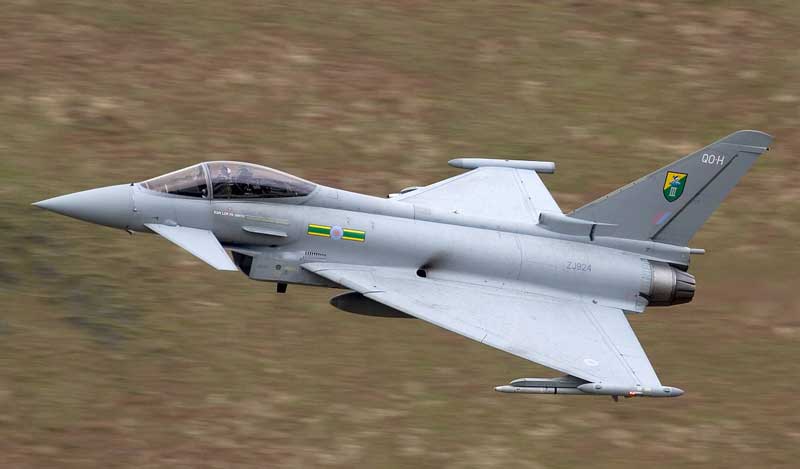
Eurofighter Typhoon

Eurofighter-TyphoonEurofighter Typhoon is a 5th generation jet fighter developed by many Europeans countries combined to achieve air superiority. It is one of the best fighter jets in Europe with modern technology. It has the ability to supercruise with the powerful twin engine that gives it the maximum speed of 1,852 km/h. Also, it is equipped with modern precision weapon guided system.

Features:

  • Unit cost: €90 million
  • Speed: 1.5 Mach (1,852 km/h)
  • Thrust: 2 × 20,230 Ib (90 KN)
  • Range: 2,900 km
  • Wingspan: 15.96 meters

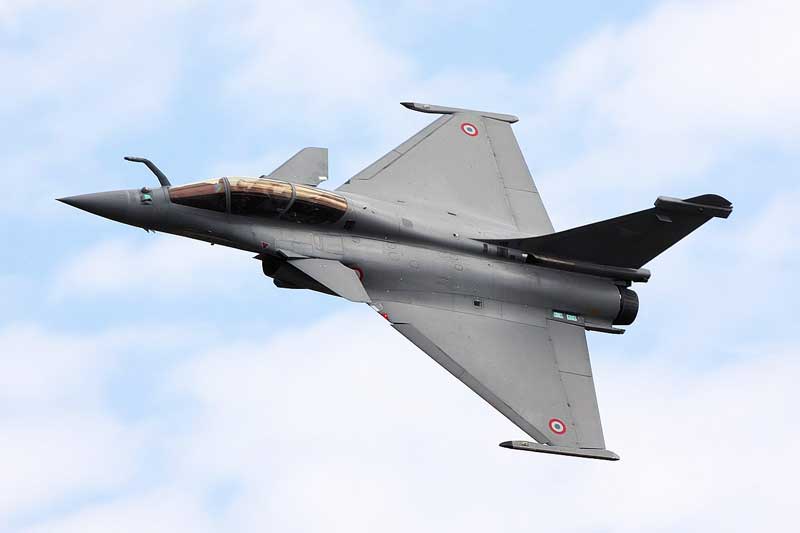
Dassault Rafale

Dassault-RafaleDassault Rafale is a French jet fighter plane with a twin engine and has the capability to carry a wide range of weapons. It was developed to achieve the multirole in the battlefield to defeat the enemy both in air-to-air combat and air-to-ground combat. Also, it has the ability to take part in nuclear warfare and aerial reconnaissance. This jet fighter enlists itself in the top ten list of fighting jets.

Features:

  • Unit cost: €74 million
  • Speed: 1.8 Mach (1,912 km/h)
  • Thrust: 11,250 Ibf (50 KN)
  • Range: 3,700 km
  • Wingspan: 10.8 meters

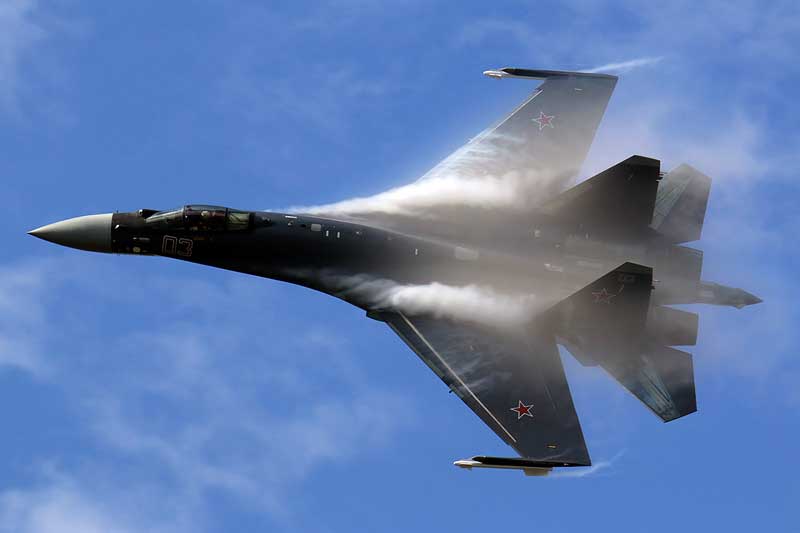
Sukhoi Su-35

Sukhoi-Su-35Sukhoi Su-35 is a Russian jet fighter and an improved version of Su-27 jet fighter. This jet fighter has a twin engine with excellent maneuverability. It is designed to accomplish multirole missions and achieve the air-supremacy. The weight carrying capability of Su-35 is much improved than its predecessor Su-27. Many nations including China and Indonesia have shown their interest in this jetfighter and have ordered it from Russia.

Features:

  • Unit cost: US$40-65 million
  • Speed: 2.25 Mach (2,400 km/h)
  • Thrust: 2 × 31,900 Ibf (86.3 KN)
  • Range: 3,600 km
  • Wingspan: 15.3 meters

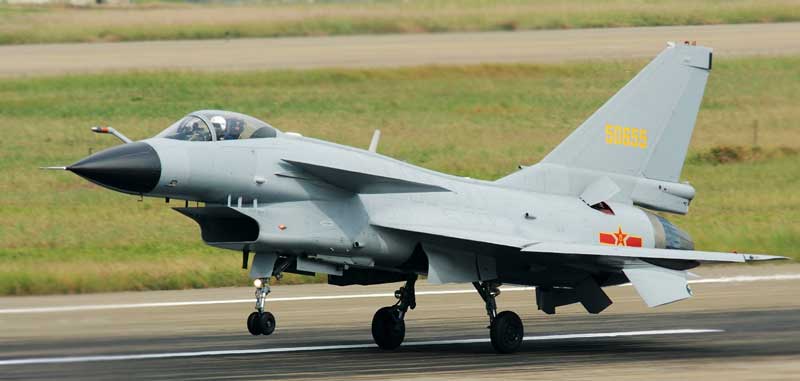
Chengdu J-10

Chengdu-J-10J-10 is one of the best jet fighter developed by China and was the first Chinese aircraft to challenge the Western and also Russian advanced aircraft. This jet fighter was designed for multirole missions and has the capability to operate in all weather conditions. It is very lightweight and very cheap as compared to its competitor Russian jet fighters.

Features:

  • Unit cost: US$84 million
  • Speed: 1.8 Mach (1912 km/h)
  • Thrust: 29,000 Ibf (130 kN)
  • Combat Radius: 550 km
  • Wingspan: 9.75 meters

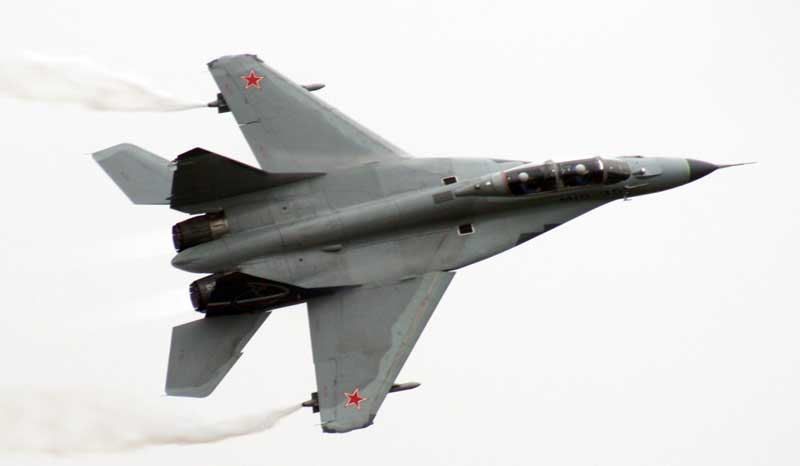
Mikoyan MIG-35

Mikoyan-MIG-35MIG-35 is a 4th generation multirole fighter jet developed by Russia. This jet fighter was evolved from several Russian jet fighter designs and has the advanced avionics and precise weapon system with the capability of precision-guided targeting. This jet fighter has several other features which make it independent from ground-controlled interception for conducting multirole operations. One of those features that make it independent is a redesigned optical locator system.

Features:

  • Unit cost: US$40 million
  • Speed: 2.2 Mach (2,400 km/h)
  • Thrust: 19,840 Ibf (88.3 kN)
  • Range: 2,000 meters
  • Wingspan: 12 meters

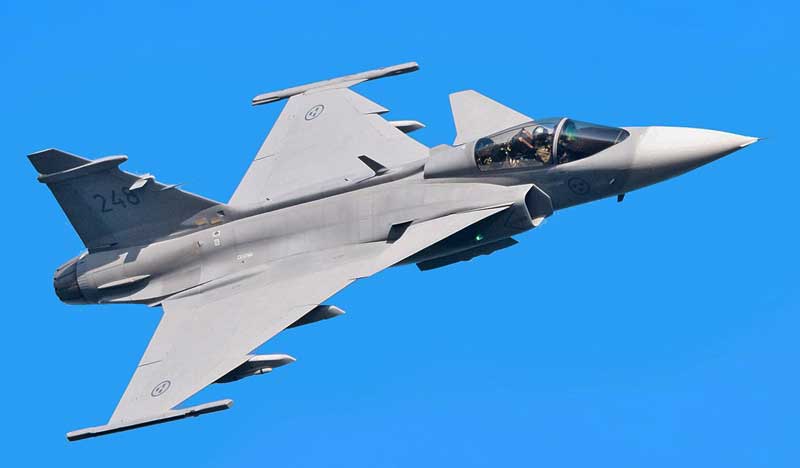
Saab JAS 39 Gripen

Saab-JAS-39-GripenJAS 39 Gripen is a multirole jet fighter developed by Sweden. The development and manufacturing of this jet fighter is done by Saab – a Swedish aerospace company. It is designed with a lightweight frame and an advanced aerodynamic layout to reduces fuel consumption. It is very fuel efficient yet a powerful jet fighter with a top speed of 2 Mach (2470 km/h). The company, Saab, claims that the operating cost of this jet fighter is the lowest of all the fighter jets that are operational around the world.

Features:

  • Unit cost: US$30-60 million
  • Speed: 2 Mach (2470 km/h)
  • Thrust: 18,100 Ibf (80.5 KN)
  • Range: 3,200 km
  • Wingspan: 8.4 meters

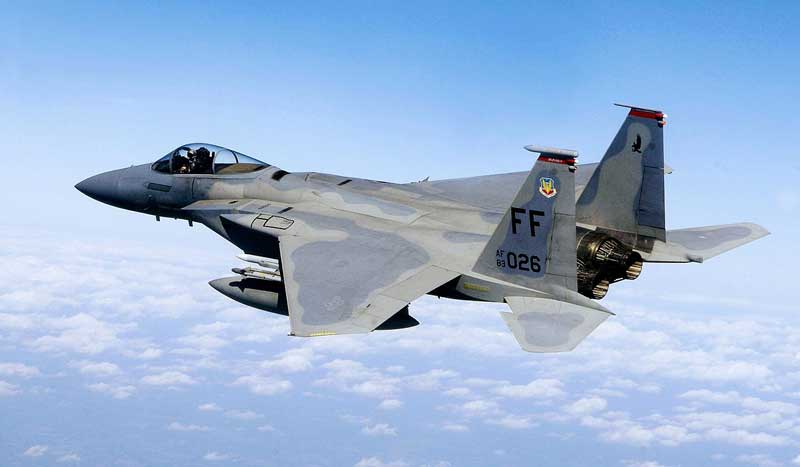
F-15 Eagle

F-15-EagleF-15 Eagle is an American jet fighter designed by McDonnell Douglas for aerial supremacy. It is the most successful fighter jet that was used by Israel for attacking Arabs nations and consolidating its occupied land. This fighter jet is specifically designed for air-to-air combat, but it also has the capability for ground-attacking. The flexibility in the design of aircraft inspired engineer to develop its improved version, named F-15E Strike Eagle which is a more powerful jet fighter.

Features:

  • Unit cost: US$29.9 million
  • Speed: 2.5+ Mach (2665+ km/h)
  • Thrust: 2 × 23.920 Ibf (106.4 KN)
  • Combat Radius: 1967 km
  • Wingspan: 13.05 meters

F-16 Fighting Falcon

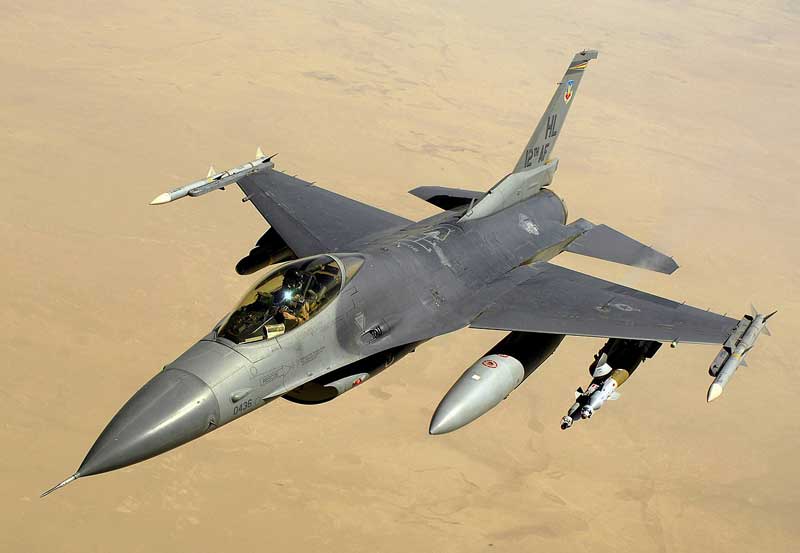
F-16-Fighting-FalconF-16 Fighting Falcon is one of the most popular jet fighters among all the jet fighters of the world. It has many variants that were developed over time as the technology progressed. This fighter jet was developed by the U.S. in 1970 to gain the air-superiority but now it a multirole fighter jet.
This fighter jet has been produced in very large scale and more than 4,500 jets are currently operating under United States Air Force. Currently, U.S. Air Force has stopped purchasing this jet, but this jet is still famous is many countries and is being exported to them with many improvements.

Features:

  • Unit cost: US$18.8 million
  • Speed: 2 Mach (2,120 km/h)
  • Thrust: 28,000 Ibf (127 KN)
  • Range: 4,220 km
  • Wingspan: 9.96 meters